Mid Murray Council
Disability Access and Inclusion Plan
2026-2030
Document Control
|
Report Title: |
Disability Access and Inclusion Plan - 2026-2030 |
|||
|
Client: |
Mid Murray Council |
|||
|
Version |
Date |
Status |
Prepared by |
Reviewed by |
|
First draft |
02/12/25 |
Initial Draft |
Caroline Fuentes – Healthy Environs |
Sally Modystach – Healthy Environs |
|
Second draft |
16/12/25 |
Internal Draft |
Healthy Environs |
Mid Murray Project Steering Committee |
|
Final draft |
21/12/26 |
Draft for SGEA/Council endorsement |
Draft for endorsement |
Mid Murray SMT |
|
Draft post-consultation |
26/03/26 |
Revised draft following community consultation |
Caroline Fuentes – Healthy Environs |
Sally Modystach – Healthy Environs |
|
Final Draft Version |
29/04/26 |
Final draft including Committee/Council feedback |
Mid Murray Administration |
Mid Murray SMT |
|
Final Version |
19/05/26 |
Final version adopted by Council |
Mid Murray Administration |
Mid Murray Council |
Acknowledgement of Country
Mid Murray Council would like to acknowledge and pay respect to the Traditional Custodians of the land: the Ngadjuri, Ngaiawang, Ngangaruku, Ngarkat, Ngarrindjeri and Peramangk Peoples of the Mid Murray lands and waters. It is upon their ancestral lands and waters that the Mid Murray Council operates, and Council pays respect to Elders, past and present, and their spiritual beliefs that are of continuing importance to those First Nations Peoples of today. Council further acknowledges the contributions and important role that First Nations Peoples continue to play within the community.

Message from the Mayor
I am pleased to present the Mid Murray Council’s Disability Access and Inclusion Plan
(DAIP)
2026–2030.
This plan is a testament to our community’s shared vision: a region where everyone, regardless of ability, can participate fully, feel respected, and enjoy equal access to facilities, opportunities and services.
Our Council area is diverse and resilient, but we know that barriers to full participation in our community still exist for many of us living with disability.
We have listened to the voices of our community particularly those amongst us with lived experience of disability and their families, carers and advocates. The insights shared have shaped a plan that is practical and grounded in lived experience across the life-course of our community.
For those of you who contributed: thank you for your honesty, your ideas, and your willingness to work together. Your input has shaped this plan, and your ongoing involvement will ensure its success.
The Mid Murray DAIP 2026-2030 is not just a document; it is a commitment. It sets out clear actions to improve accessibility, foster inclusiveness, ensure that our services, facilities, and programs are welcoming to all, but vitally, to continue the conversation with those living with disability regarding decisions of council that affect them.
This DAIP also recognises that building an inclusive community and sustaining the effort, is not just the work of one plan, nor can it be achieved through individual time specific actions. That is why many of the actions identified, aim to build access and inclusion considerations and criteria into the way we do business and what we prioritise. Getting this right will enable us to embed inclusion into every aspect of Council’s work, from infrastructure and community events to services, employment and advocacy – providing a solid foundation to further expand upon in future plans.
I thank everyone who contributed to this plan, especially those who shared their experiences and ideas.
Together, let’s make Mid Murray a place where everyone feels welcome, respected, and able to thrive.
Mayor, Mid Murray Council
Table of Contents
Strategic and Legislative Context
Key Achievements Since the 2020–2024 DAIP
Disability Access andInclusion Plan development
Domain 1:Inclusive environments and communities
Domain 2: Education and employment
Domain 3: Personal and community support
Domain 4: Health and wellbeing
Domain 5: Safety, rights and justice
Contact Details
This Disability Access and Inclusion Plan (DAIP) is available in fully accessible word/pdf version on the Mid Murray Council website: https://www.mid-murray.sa.gov.au/. For enquiries please call: 08 8569 0100 OR email: postbox@mid-murray.sa.gov.au
Executive summary
The Mid Murray Council Disability Access and Inclusion Plan (DAIP) 2026–2030 sets out Council’s commitment to creating a more inclusive, accessible, and connected community, where people with disability can participate fully in all aspects of community life. The Plan outlines a coordinated approach to addressing barriers to access and inclusion across Council’s services, facilities, and operations, while recognising Council’s role, responsibilities, and resource context.
The DAIP has been informed by a structured and inclusive engagement process, ensuring that the voices of people with lived experience of disability, their families, carers, service providers, and Council staff have shaped its direction. A range of engagement methods were used, including community workshops, drop-in sessions across multiple townships, individual interviews, and online and hardcopy surveys, supporting broad participation.
Consultation findings highlighted that there is no single dominant issue impacting the disability community. Instead, multiple and interconnected barriers to access and inclusion were identified across areas such as physical access, transport, information dissemination, service delivery, and community participation. These findings reinforce the need for a balanced and coordinated approach, where all priority areas are recognised as equally important.
The DAIP is structured around five key domains aligned with the State Disability Inclusion Plan:
- Inclusive Environments and Communities;
- Education and Employment;
- Personal and Community Support;
- Health and Wellbeing; and
- Safety, Rights and Justice.
Within these domains, the Plan outlines actions that respond to local priorities. In areas beyond Council’s direct control, the Plan also places strong emphasis on advocacy and partnerships with other levels of government and service providers.
The DAIP outlines initial implementation priorities with commitment to establishing ongoing dialogue with people with lived experience of disability. The DAIP implementation framework will support the refinement of actions over time in line with community feedback and required resources. The initial phase focuses on establishing the key foundations required to support the DAIP delivery, including governance structures, clear roles and responsibilities, data and reporting processes, and early priority actions.
A central focus of the Plan is to embed access and inclusion considerations across all Council services, functions, and processes. By integrating these principles into everyday operations, Council aims to move beyond standalone initiatives and establish a strong and sustainable foundation for continuous improvement. This approach will enable Council to strengthen and expand its efforts over time, supporting a more inclusive, accessible, and connected community for all.
About Mid Murray Council
Mid Murray Council governs one of South Australia’s largest and most geographically diverse local government areas, spanning 6,273 square kilometres and incorporating 16 townships and settlements, 52 holiday home communities, and numerous shack settlements along 220 km of the River Murray corridor. Key townships include Mannum, Morgan, Blanchetown, Swan Reach, Cambrai, and Truro, alongside many smaller communities. The permanent population is approximately 9,593 residents, increasing seasonally to around 20,000 during peak tourism periods, which places additional demand on local services and infrastructure.
Community Profile
Mid Murray is a proud and resilient community with a strong sense of identity and connection to place. The demographic profile reflects a diverse population, including older residents, families, and people living with disability. Almost 40% of residents are aged over 60 years, and 7.7% identify as living with disability. The area also experiences higher rates of long-term health conditions (40.1%) and mental health challenges (11.5%) compared to state averages. These factors, combined with geographic isolation, transport disadvantage, lower income levels and limited access to health and support services across the region, highlight the importance of inclusive, tailored approaches to service delivery across all levels of Government.
Financial and Infrastructure Realities
Mid Murray Council operates within a challenging financial environment. The Council manages an extensive asset base, including 3,383 km of roads, 24 km of formal footpaths, kerbing networks, and numerous public facilities, while relying on a relatively small ratepayer base. For example, Mid Murray Council has one ratepayer per 327 metres of road, compared to metropolitan councils that can have one ratepayer per 12 metres of road.
As detailed in Council’s various Infrastructure and Asset Management Plans (AMPs) Council’s infrastructure and assets have a total estimated capital value of $268,619,145.00 with value for the following assets: Bridges - $7,355,639.00; Buildings & Structures - $62,358,000.00; Community Wastewater Management Systems - $31,774,020.00; Footpaths - $2,954,151.00; Kerbs - $8,716,638.00; Plant & Machinery - $12,454,000.00; Stormwater - $7,075,660.00; Transport - $105,638,736.00; Watercraft - $6,812,301.00; Land - $23,480,000.00. River Facilities and Open Space is not included in this total as yet, with Asset Management Plans being developed.
The significant infrastructure and asset base, with limited ability to raise revenue, creates significant cost pressures for maintenance and renewal.
As part of a sector-wide review, the Essential Services Commission of South Australia (ESCOSA) identified Mid Murray Council as “potentially unsustainable,” in February 2023, recommending measures for financial sustainability such as asset renewal prioritisation, service consolidation, and workforce efficiencies. Council has worked proactively to implement these recommendations while balancing community expectations for improved services. The impact of the 2022–23 River Murray flood, which caused $13.7 million in damage and reduced rateable income by 36% in affected areas, adds to these challenges, and significantly limits the ability for council to fill gaps in service delivery outside of its core legislated responsibilities at this time.
Council’s Role, Services, and Facilities
Mid Murray Council provides governance and services that support community wellbeing, safety, and development. Its responsibilities include maintaining infrastructure, managing assets, and delivering programs that enhance social connection and economic sustainability.
Council operates customer service hubs in Mannum, Cambrai, Morgan, and Blanchetown, and provides access to libraries and learning spaces, including school community libraries and the Mid Murray Toy Library. Recreational facilities include the Mannum Leisure Centre, Cambrai Swimming Pool, and Morgan Activity Centre. Council also manages public infrastructure such as footpaths, public toilets, car parks, and street lighting, as well as open spaces like parks, reserves, playgrounds, and walking trails.
In addition to physical infrastructure, Council delivers community programs focused on public health protection, wellbeing, volunteering, and social inclusion. It supports events, provides grants, and partners with local organisations to strengthen community capacity. Council also plays an advocacy role, working with state and federal agencies to improve access to health services, housing, and transport for the region.
Balancing Sustainability and Community Expectations
Mid Murray Council is committed to working collaboratively with its community to balance financial sustainability with the need for accessible, inclusive services. While residents seek improved infrastructure and amenities, Council must prioritise asset renewal and cost containment to remain viable. Ongoing advocacy for equitable funding and partnerships with other levels of government remains critical to achieving these goals.
Our vision
Mid Murray Council’s Strategic Plan 2024-2028 has a Strategic Goal to have a community that is engaged, supported and connected, and through its services and programs create a community that is inclusive, welcoming, and safe for everyone. This means people with disability can participate fully in community life, access services and facilities, and feel respected and valued.
Council’s Community Development Strategy, Building Stronger Communities (2024), and the Regional Public Health and Wellbeing Plan (2022-2026), further strengthens this alignment focusing on health, safety, and social connection and ensuring that programs and projects create opportunities for engagement and capacity building, supporting the vision of a community where everyone can thrive.
Council aligns with the State Disability Inclusion Plan’s vision of “A South Australia where no one is left behind” by embedding this principle into its own planning and operations. Through the Strategic Plan 2024–2028, Council commits to fostering diversity and inclusion, supporting volunteers, and improving access to facilities, while promoting sustainability, liveability, and prosperity.
Strategic context
Strategic and Legislative Context
The Disability Access and Inclusion Plan (DAIP) for Mid Murray Council is grounded in a legislative and policy framework that ensures compliance and alignment with state, national, and international obligations.
The development of disability rights in Australia has a rich history, beginning with the introduction of the Invalid Pension in 1908, which provided financial support to people unable to work due to disability. The aftermaths of World War I and II saw the establishment of rehabilitation services for returned service personnel, further shaping the landscape of support and inclusion. In 1980, Disabled Peoples International was founded as a lobby group advocating for the rights of people with disability on a global scale. The Disability Services Act was passed in Australia in 1986, followed by the Disability Discrimination Act in 1992, both of which strengthened legal protections and promoted equal opportunities. In 2008, Australia adopted the United Nations Convention on the Rights of People with a Disability, reaffirming its commitment to accessibility and inclusion.
The Disability Inclusion Act 2018 (SA) requires all South Australian councils to prepare and implement DAIPs that give effect to the State Disability Inclusion Plan and uphold the rights of people with disability to participate fully in community life. This Act establishes clear principles of equity, dignity, and accessibility, and mandates reporting under Regulation 9(4) of the Disability Inclusion Regulations 2019 (SA).
The State Disability Inclusion Plan 2025–2029, titled A South Australia where no one is left behind, provides the overarching strategic direction for disability inclusion across the state. It sets out five domains: Inclusive Environments and Communities; Education and Employment; Personal and Community Support; Health and Wellbeing, and Safety, Rights and Justice, each with priority areas and measurable outcomes. These domains are informed by extensive consultation with people with disability, their families, carers, and advocacy groups, ensuring that lived experience shapes policy and practice. The State Plan also emphasises intersectionality, recognising the compounded disadvantage faced by priority groups such as Aboriginal people with disability, culturally and linguistically diverse communities, women, children, LGBTIQA+ individuals, and those living in regional areas like Mid Murray.
Nationally, the DAIP aligns with Australia’s Disability Strategy 2021–2031, which provides a unified approach to improving access and inclusion across all levels of government. This strategy reinforces the importance of mainstream services being accessible and inclusive, complementing the work of the National Disability Insurance Scheme (NDIS) while focusing on broader societal change.
Internationally, the DAIP reflects the principles of the United Nations Convention on the Rights of Persons with Disabilities (UNCRPD), which Australia ratified in 2008. The UNCRPD affirms that disability is not an individual impairment, but a result of barriers created by society, and it obliges governments to remove these barriers and protect the rights of people with disability in all areas of life. Mid Murray Council’s DAIP operationalises these principles at the local level, ensuring that global human rights standards translate into tangible actions for its community.
Mid Murray Council Context
The DAIP is not a standalone document; it forms part of Mid Murray Council’s broader strategic and operational framework. The Strategic Plan 2024–2028 positions the DAIP alongside the Regional Public Health Plan, Reconciliation Action Plan and the Community Development Strategy as key strategies for creating an inclusive community. It also prioritises actions such as supporting volunteers and improving access to facilities, ensuring that inclusion is embedded across Council’s programs and services.
The Community Development Strategy (2024) outlines Council’s role in empowering communities, promoting equity, and delivering programs that enhance wellbeing. Importantly, it recognises people with disability as a priority group and calls for inclusive approaches in planning and service delivery.
Council’s Infrastructure and Asset Management Plans provide a systematic approach to maintaining and upgrading infrastructure, including roads, footpaths, kerbs, bridges, and buildings. These plans incorporate accessibility considerations, such as installing kerb ramps to Australian Standards and improving connectivity for mobility-impaired residents.
Similarly, the Service Provision Policy ensures that all services are aligned with strategic objectives and delivered in a way that meets community needs, including those of people with disability.
Workforce-related policies, such as the Volunteer Policy (2023) and Recruitment Policy (2025), embed principles of equal opportunity and inclusion. They commit to providing reasonable adjustments, promoting diversity in recruitment, and supporting volunteers with disability through targeted training and safe environments. These policies complement the DAIP by addressing barriers within Council’s own operations and workforce.
By integrating the DAIP with these existing plans and strategies, Mid Murray Council ensures that disability inclusion is not treated as a separate initiative but as a core element of governance, planning, and service delivery. This approach strengthens accountability, promotes consistency, and maximises the impact of actions across all areas of Council business. Figure 1 illustrates the Planning hierarchy of Mid Murray Council.
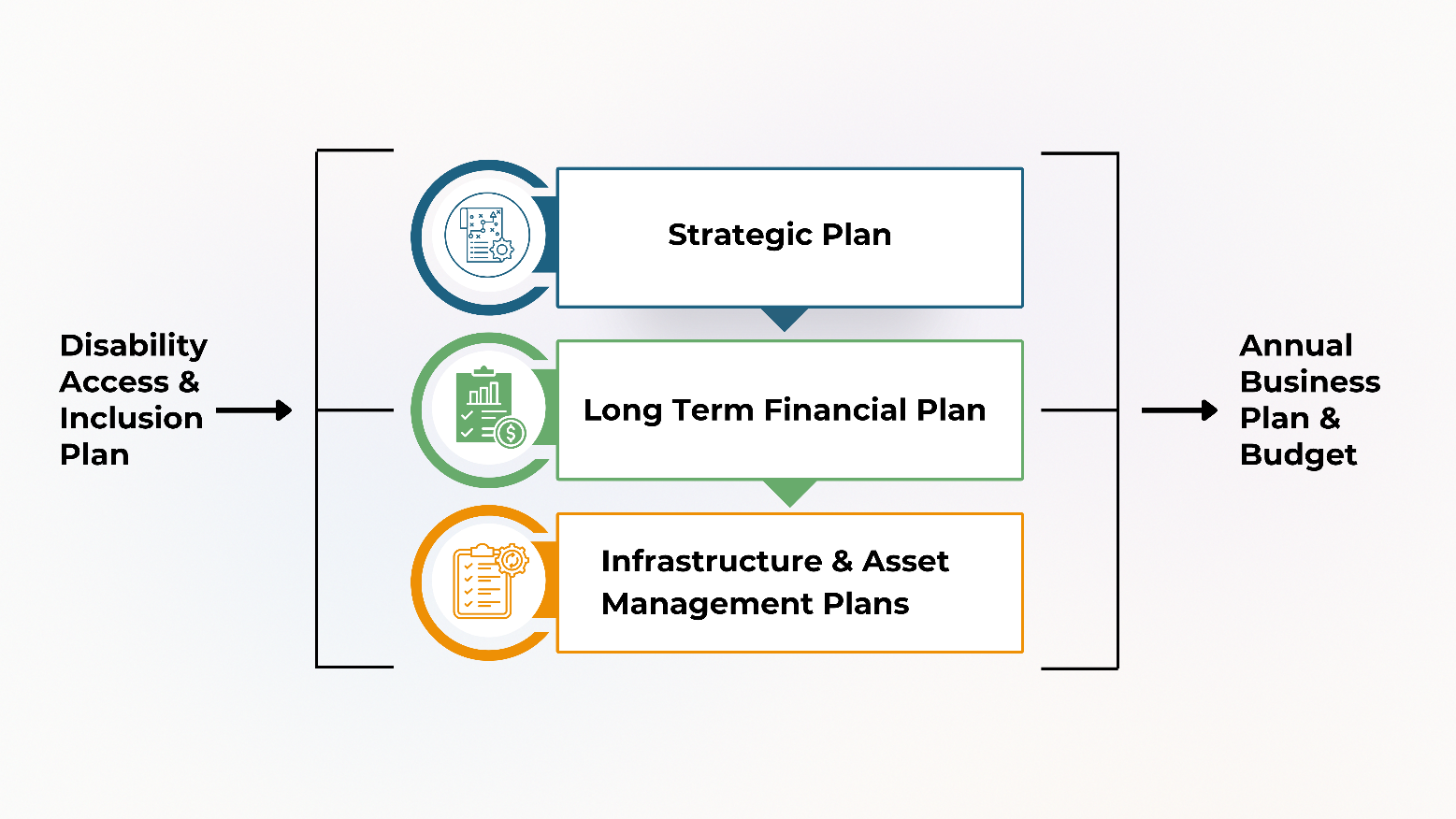
Figure 1: Planning framework
Our Workplace
Mid Murray Council is an Equal Opportunity Employer. Recruitment and induction policies include commitments to diversity and workplace adjustments for people with disability. Staff induction covers disability awareness, safe environments for children and young people, and inclusive practices. Council encourages applications from people with disability and works to provide flexible arrangements.
Mid Murray Council is committed to fostering a workplace culture where inclusion is embedded in everyday practice. Workforce strategies will prioritise creating an environment that values diversity and ensures all employees feel respected and supported. Actions will include providing disability awareness training for staff and leaders, implementing reasonable adjustments where needed, and strengthening inclusive policies and practices. Council will also establish mechanisms to listen to staff feedback, promote open dialogue, and continuously improve accessibility and inclusion across the organisation.
Key Achievements Since the 2020–2024 DAIP
Mid Murray Council has made significant progress in improving accessibility and inclusion under its previous Disability Access and Inclusion Plan. These achievements reflect a strong commitment to creating a community where people with disability can participate fully and confidently.
- Infrastructure and Physical Access - Council invested in constructing formal footpaths around its offices to meet Disability Discrimination Act (DDA) compliance standards. These upgrades improved connectivity and safety for people using mobility aids. Accessible signage was installed, and vegetation clearance was maintained to ensure clear pathways.
- Digital and Communication Accessibility - Council enhanced its website by introducing text-to-audio functionality and magnification tools, supporting people with vision impairments and those who prefer alternative formats. Further, inclusive Community Information Kiosks were installed across Council offices, including computers with magnification software and specialised audio, including hardware, software and furniture and portable magnifiers installed at Morgan, Cambrai and Mannum Council Offices. Feedback indicated that information access remains a challenge, with over-reliance on social media and limited Easy Read or Auslan resources. In response, Council has begun exploring options for providing information in multiple formats and improving signage and wayfinding across facilities.
- Community Inclusion Initiatives - Council promoted the Companion Card program at tourism sites, enabling carers to accompany people with disability at no extra cost. It also recorded Council meetings and made them publicly accessible online for six months, improving transparency and participation for residents unable to attend in person. Feedback highlighted the need for more inclusive events and programs, and Council is committed to embedding universal design principles in future community activities.
- Emergency Preparedness and Safety - Upgrades to emergency egress routes were initiated at Cambrai and Mannum offices, ensuring safer evacuation for people with mobility challenges during emergencies. Feedback also identified concerns about the lack of disability-specific emergency planning and the need for co-designed solutions. Council acknowledges these gaps and will address them in the new DAIP.
- Strategic Planning and embedding access and inclusion - Strategic Growth & Economic Activation Committee has been established, with one of the objectives of the Committee to ensure consideration is given to universal design and disability access and inclusion for open space, recreation and reserve area strategies and strategic development. Universal design, and access and inclusion planning is a relevant experience/interest called for in independent members.
Remaining Barriers and Challenges
Despite these achievements, feedback during the engagement phase has identified ongoing barriers such as insufficient accessible toilets, lack of adult Changing Places facilities, and the absence of a formal Disability Advisory Committee. Physical accessibility issues persist in some towns, including steep gradients and inadequate ramps, and there is a need for greater awareness of invisible disabilities among staff and volunteers.
Additional barriers identified that sit outside of Council’s core responsibilities and capabilities, such as limited public transport options, inconsistent access to health, wellbeing and personal care services, and access to housing, have been acknowledged as barriers in the plan with Council action to continue to advocate for increased access to these services.
Council’s Commitment Moving Forward
While these challenges remain, Mid Murray Council is committed to finding practical and innovative ways to meet the needs of its staff, residents, and visitors within its resources and financial challenges. This DAIP will build on past progress and address identified gaps through targeted actions, co-design with people with lived experience, and partnerships with service providers. By embedding accessibility and inclusion into all aspects of planning and service delivery, Council aims to create a community where everyone feels valued, respected, and able to participate fully.
Disability Access and Inclusion Plan development
Consultation
The development of the Mid Murray Council Disability Access and Inclusion Plan (DAIP) 2026–2030 was guided by a structured and inclusive engagement process facilitated by Healthy Environs and Council staff, in alignment with the Disability Inclusion Act 2018 (SA) and the State Disability Inclusion Plan 2025–2029. The process ensured meaningful participation from Council staff, Elected Members, stakeholders from the disability sector, community members, and people with lived experience of disability, consistent with principles of accessibility outlined in the DAIP Guidelines and State Plan.
Engagement Approach
Council adopted a multi-phase engagement strategy designed to:
- Maximise accessibility through online and face-to-face options.
- Embed lived experience by prioritising voices of people with disability and carers.
- Apply ethical safeguards, including informed consent, voluntary participation, and culturally safe practices.
- Reach diverse groups, including priority populations identified in the Act (Aboriginal people, CALD communities, women, children, LGBTIQA+, and people in regional areas).
Methods included:
- Online and hardcopy surveys.
- Council and community workshops.
- Drop-in sessions in regional towns.
- Individual interviews for tailored consultation.
- Remote participation options.
Engagement Activities
The engagement process aimed to be accessible and inclusive, offering multiple ways for community members to participate and ensuring support was available as needed.
Community Workshop – 5 November 2025
The community workshop took place at Mannum Council facilities in an accessible venue. The purpose was to gather input on access and inclusion priorities. Attendance reached 15 people and included people with lived experience and stakeholders from the disability sector.
Drop-in Sessions – 11 & 12 November 2025
Three drop-in sessions were held in Morgan, Cambrai and Blanchetown, providing informal opportunities for community members to share feedback. These sessions were conducted in accessible locations and offered flexibility for participants to engage at their convenience. Four community members attended these sessions.
Individual Interviews – October 2025
Tailored engagement was provided through individual interviews conducted via phone or email for participants who preferred or required a more personalised approach. This ensured that people with specific needs or constraints could still contribute meaningfully.
Online Community Survey – 15 October to 14 November 2025
An online survey was available throughout the engagement period, complemented by hardcopy versions distributed at Council offices and community hubs to ensure accessibility for those without internet access. Assistance was offered to complete surveys where needed, ensuring equitable participation. The survey received 26 individual submissions, with additional contributions from workshops and drop-in sessions, totalling 33 recorded inputs.
Council Internal Workshop – 29 October 2025
In addition to the above community engagement, On 29 October 2025, Mid Murray Council held an internal workshop across its Cambrai and Mannum meeting rooms, with an online option available to ensure remote participation. The session was designed to be accessible for all attendees, including elected members, managers, staff with lived experience, and their carers. In total, 32 participants took part, representing a broad cross-section of Council staff and leadership. Among those present were seven Council Elected Members, two representatives from the Strategic Growth and Economic Activation Committee, four executive directors, eight managers and team coordinators, and eleven officers.
Key Insights from Engagement
The following illustration shows key themes and ideas shared by staff and community about access and inclusion in Mid Murray, highlighting what matters most to them.
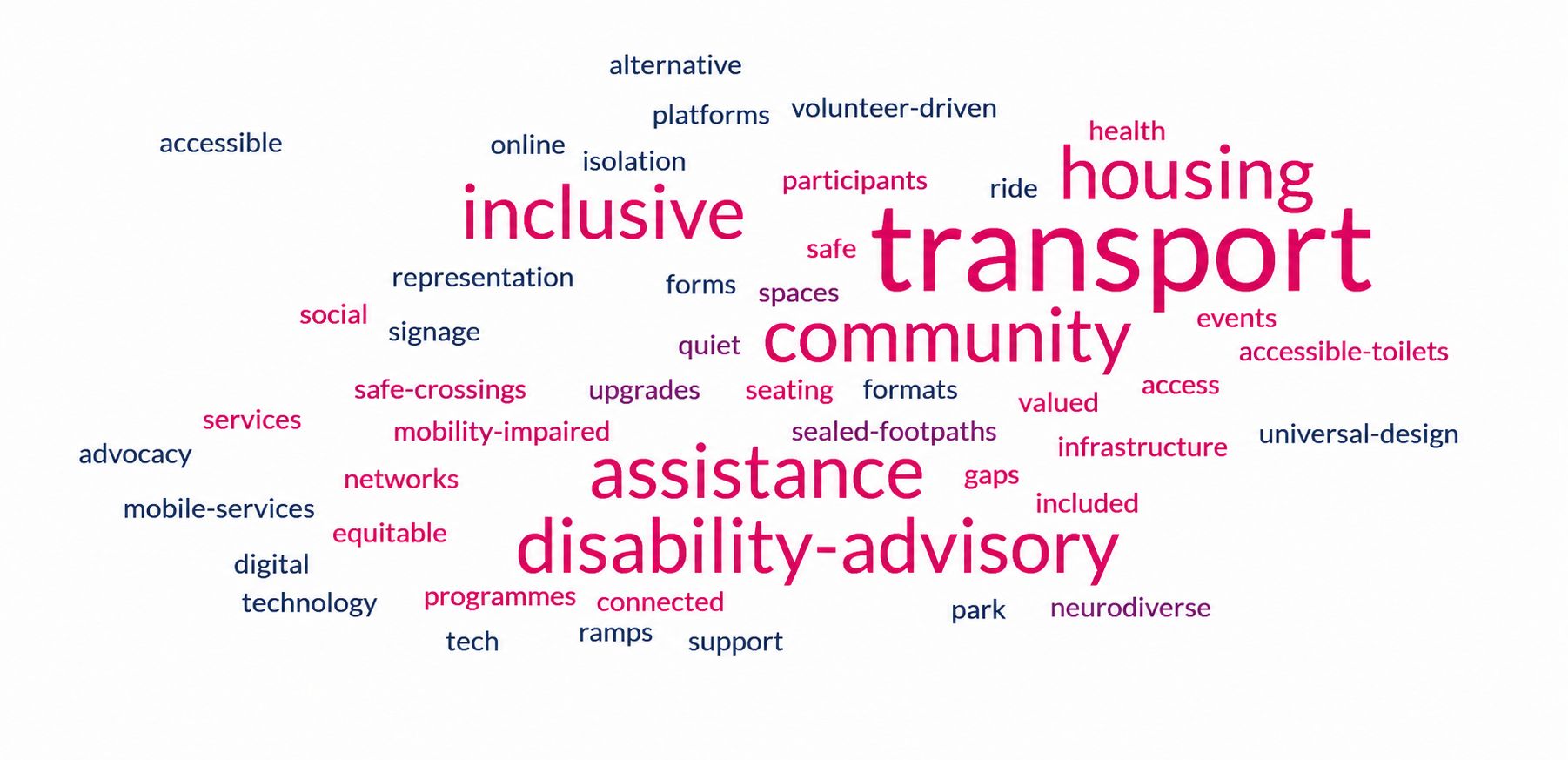
Community engagement revealed several recurring themes that highlight barriers to access and inclusion:
- Physical Accessibility: Lack of sealed footpaths, uneven surfaces, and inadequate ramps in towns such as Morgan, Blanchetown, and Mannum.
- Accessible Facilities: Insufficient accessible toilets and heavy doors.
- Transport and Connectivity: No public transport options; reliance on community cars and volunteers.
- Health and Wellbeing: Limited local health services; long travel distances for GP and therapy.
- Information Access: Over-reliance on social media; need for clearer signage, alternative formats, and a local Facilitation Officer.
- Inclusive Design: Desire for universal design in new infrastructure and upgrades.
- Priority Group Needs: Barriers for older adults, carers, and people with sensory or neurodiverse conditions.
- Governance and Support Structures: Need for a formal Disability Advisory Group to guide inclusive decision-making and a dedicated Facilitation Officer to assist people in accessing relevant services and supports.
Actions proposed to address these issues, within the scope of the council’s responsibilities as a local authority and financial limitations, are detailed in the Action Plan tables in the next section. These actions are aligned with the State Disability Inclusion Plan measures to ensure consistency and compliance.
Community Consultation on the Draft DAIP – 18 February to 20 March 2026
Community consultation regarding the Draft DAIP was conducted through an online survey on Council’s “Your Say” platform, supplemented by hard copies and support where requested. Input from individuals with disability, carers, and community members identified key priorities including physical accessibility, improved clarity in communication, and ensuring accountability with the Plan’s implementation. This feedback informed the refinement of the DAIP and Council’s implementation framework. Council acknowledges that prioritisation and monitoring of actions is critical and is committed to the establishment of a Disability Advisory Group to support implementation.
DAIP Domains
Our focus is structured around the five domains identified in the State Plan. Figure 2 highlights the Domains and Priority areas identified to address ongoing challenges, complement existing inclusion initiatives and drive more coordinated, impactful outcomes for people with disability accessing our services.
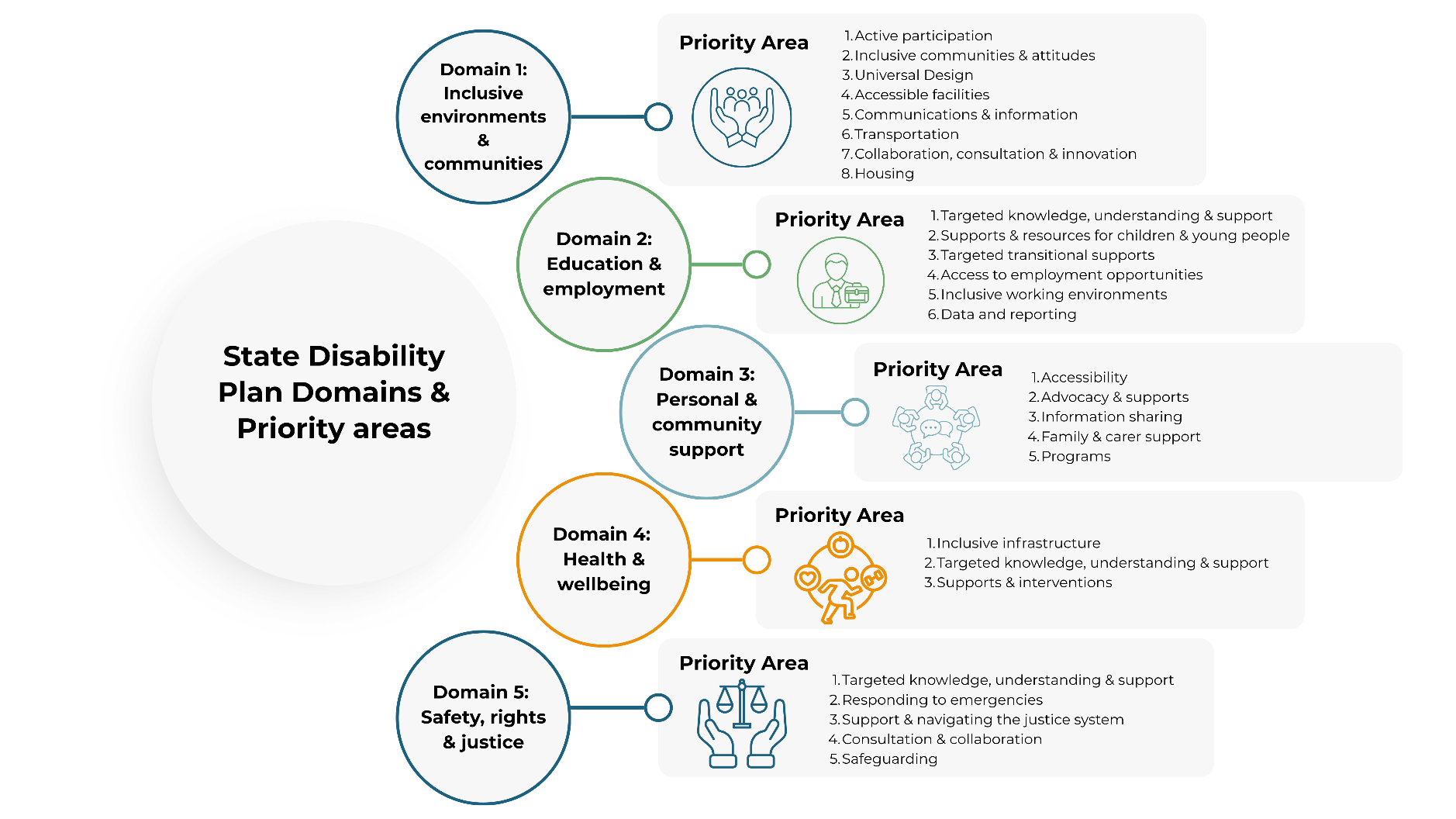
Figure 2: State Domains and Priority areas
DAIP actions
Domain 1: Inclusive environments and communities
Outcome Statement: A South Australia where all people with disability can participate as equal citizens and feel connected to their communities
Objective: To influence community attitudes to remove discrimination and build a South Australian community that values difference and respects the contributions people with disability make to our communities. This includes ensuring the community itself is fully accessible.
Priority Areas for Domain 1
- Active participation
- Inclusive communities and attitudes
- Universal Design
- Accessible facilities
- Communications and information
- Transportation
- Collaboration, consultation and innovation
- Housing
Priority Area 1: Active participation
Outcome: People with disability are active participants in accessible and inclusive communities.
|
No. |
Action |
State Plan Measure |
Measure |
Timeframe |
Service Area & Data Source |
|---|---|---|---|---|---|
|
1 |
Develop and mandate an Inclusive Event’s Toolkit ensuring all council-run and supported events follow good practice accessibility principles (Accessible and Inclusive Community Events Toolkit), including consideration of designated seating for mobility-impaired people and sensory-friendly spaces in planning. Imbed inclusive event planning principles into community run event planning checklists. |
1.1.2 |
The number of inclusive and accessible events, both internal and external, with 50+ people following best practice event management principles. For example, the Accessible and Inclusive Community Events Toolkits. |
Start within 24 months; ongoing. |
Events Data: Event registers, accessibility checklists, post-event evaluations. |
|
1a |
Develop accessible communication mechanisms to communicate community information (ie. Easy read/ large print version of newsletters and programs) and distribute through multiple channels (posted, community hubs, main streets) and incorporate into Public Consultation Policy/Community Engagement Policy and template, Inclusive Community Event’s toolkit and community run event checklists |
1.1.2 |
The number of inclusive and accessible events, both internal and external, with 50+ people following best practice event management principles. For example, the Accessible and Inclusive Community Events Toolkits. |
Within 24 months; ongoing. |
Engagement and Communication Data: Marketing records. |
|
1b |
Introduce inclusive sports and recreation programs at Mannum Leisure Centre and community hubs. |
1.1.2 |
The number of inclusive and accessible events, both internal and external, with 50+ people following best practice event management principles. For example, the Accessible and Inclusive Community Events Toolkits. |
Within 3 years. |
Sport, Recreation and Leisure Data: Program schedules and participation records. |
Priority Area 2: Inclusive communities and attitudes
Outcome: People with disability are respected and included in their communities, where inclusive attitudes and behaviours and widely demonstrated.
|
No. |
Action |
State Plan Measure |
Measure |
Timeframe |
Service Area & Data Source |
|---|---|---|---|---|---|
|
2 |
Deliver disability awareness and inclusion training for staff, volunteers, and event organisers, including Universal Design principles. |
1.2.1 |
The number of initiatives undertaken to promote disability inclusion and improve community attitudes towards people with disability in the community, including: The number of staff and volunteers participating in disability awareness training, including Universal Design. |
Within 12 months; 2 yearly refresh. |
People and Culture Data: Training attendance records. |
|
3 |
Integrate disability awareness within Council’s Communication Campaign schedule promoting campaigns on inclusion and respect for people with disability (social media, newsletters, local media). |
1.2.1 |
The number of initiatives undertaken to promote disability inclusion and improve community attitudes towards people with disability in the community, including: The number of workplace initiatives promoting disability inclusion. |
Start within 24 months; ongoing. |
Community Planning Engagement and Communication Data: Campaign logs, engagement metrics. |
|
3a |
Incorporate disability awareness training and a champion program into Community Asset Mapping and Community Action Plans. |
1.2.1 |
The number of initiatives undertaken to promote disability inclusion and improve community attitudes towards people with disability in the community, including: The number of workplace initiatives promoting disability inclusion. |
Within 24 months. |
Community Planning People and Culture Data: Appointment records. |
|
3b |
Develop a register of priority populations and embed inclusive engagement protocols for priority groups (Aboriginal, CALD, LGBTIQA+, women, children) in all relevant engagements and programs. |
1.2.1 |
The number of initiatives undertaken to promote disability inclusion and improve community attitudes towards people with disability in the community, including: The number of workplace initiatives promoting disability inclusion. |
Within 24 months; ongoing. |
Community Planning Data: Consultation reports, participant demographics. |
|
4 |
In accordance with Council’s Reconciliation Action Plan and Public Consultation Policy/Community Engagement Policy, promote involvement of Aboriginal and Torres Strait Islander people with disability, their families, carers, and communities in the design of DAIP initiatives and other council engagements that affect them. |
1.2.3 |
The number of actions embedded in our DAIP working towards Closing the Gap targets. |
Within 24 months. |
Reconciliation Data: Reconciliation Action Plan & DAIP reports. |
Priority Area 3: Universal Design
Outcome: Everyone in South Australia can access and enjoy inclusive and accessible natural and built environments.
|
No. |
Action |
State Plan Measure |
Measure |
Timeframe |
Service Area & Data Source |
|---|---|---|---|---|---|
|
5 |
Develop and implement a prioritised schedule of accessibility audits of council buildings and public spaces. Audits and future upgrades (where required) will be subject to funding. |
1.3.2 |
The number of public-facing council buildings, spaces, play spaces and infrastructure that are modified to improve accessibility. For example, by adding signage or widening doors. |
Audit within 3 years; upgrades ongoing. |
Footpaths, Kerbs and Road Connectivity Building, Land and Structures River Facilities Open Space and Public Realm Tourism Caravan and Camping Areas Data: Audit reports, asset registers. |
|
6 |
Adopt policy of Universal Design principles in all new council developments (playgrounds, community hubs) and assess feasibility for building upgrades. |
1.3.2 |
The number of new council developments that incorporate Universal Design. |
Within 18 months. |
Footpaths, Kerbs and Road Connectivity Building, Land and Structures River Facilities Open Space and Public Realm Tourism Caravan and Camping Areas Data: Register of new council developments adopting Universal Design principals compliance checklists. |
|
7 |
Develop and implement a prioritised schedule of accessibility audits of existing parks and playgrounds, including inclusive play equipment and sensory elements. Audit outcomes and future upgrades (where required) will be incorporated into works programs and subject to funding. Identify priority projects requiring external funding and explore funding options. Embed disability access within relevant service standards. |
1.3.3 |
The number of parks, reserves, beaches and playgrounds (within these areas) that are built or modified to improve accessibility. |
Audit within 3 years. Program of works incorporated into forward budget within 3-4 years. |
Open Space and Public Realm Data: Parks and Reserves Hierarchy Project completion reports. |
Priority Area 4: Accessible facilities
Outcome: People with disability can access public toilet facilities that meet their needs when out in the community.
|
No. |
Action |
State Plan Measure |
Measure |
Timeframe |
Service Area & Data Source |
|---|---|---|---|---|---|
|
8 |
Develop a prioritised schedule of audits of public toilets (including gaps in need for Changing Places adult changing facilities). Outcomes and upgrades (where required) will be incorporated into forward capital schedule according to priority (subject to funding). Identify options for external funding for Changing Places facilities. Embed disability access standard within relevant service standards. |
1.4.1 |
The number of public council owned toilet facilities across the council area that meet accessibility standards and/or a designated Changing Places facility. |
Audit schedule -Within 12 months. Incorporate outcomes into forward schedules and budget - 12 – 18 months. Service Standards revised and adopted – 18 months. |
Building, Land and Structures Data: Facility audit reports. |
|
8a |
Publish accessible toilet locations on the National Public Toilet Map and council website and create an SOP for updating website when changes occur. |
1.4.1 |
Within 12 months. |
Building, Land and Structures Data: Website updates. |
|
|
9 |
Develop and implement a prioritised schedule of audits of footpaths (including connectivity). Incorporate outcomes into future works programs. Embed disability access standards within relevant service standard. |
1.3.2 |
Within 18 months for priority areas and within 4 years for remainder. |
Footpaths, Kerbs and Road Connectivity Data: Project completion reports. |
|
|
9a |
Consider riverfront access as part of the Tourism Precinct Planning Project. |
1.3.2 |
Within 12 months (March 2027). |
Economic Development River Facilities Tourism Data: Design plans and audit reports. |
Priority Area 5: Communications and information
Outcome: People with disability can find the information they need in the format(s) they need it in.
|
No. |
Action |
State Plan Measure |
Measure |
Timeframe |
Service Area & Data Source |
|
10 |
Work with LGA to ensure web hosting platform improves compliancy with WCAG 2.2 Level AA and develop policy and criteria for provision of Easy Read, Auslan, and multilingual formats. |
1.5.1 |
The number of resources or materials that have been developed in accessible formats. For example, websites that meet Web Content Accessibility Guidelines (WCAG) 2.2 level AA accessibility standard or above, Auslan translations and Easy Read documents. |
Within 24 months; ongoing. |
Information Technology Engagement and Communication Data: Website compliance reports, publication logs. |
|
10a |
Provide digital accessibility training for relevant staff. |
1.5.1 |
The number of resources or materials that have been developed in accessible formats. For example, websites that meet Web Content Accessibility Guidelines (WCAG) 2.2 level AA accessibility standard or above, Auslan translations and Easy Read documents. |
Training within 18 months. |
Information Technology People and Culture Data: Training attendance logs, helpdesk records. |
Priority Area 6: Transportation
Outcome: People with disability can get to where they need to go safely.
|
No. |
Action |
State Plan Measure |
Measure |
Timeframe |
Service Area & Data Source |
|---|---|---|---|---|---|
|
11 |
Advocate when required for community transport solutions. |
1.2.1 |
The number of resources or materials that have been developed in accessible formats. For example, websites that meet Web Content Accessibility Guidelines (WCAG) 2.2 level AA accessibility standard or above, Auslan translations and Easy Read documents. |
Within 24 months. |
Community Planning Data: Advocacy records, service agreements. |
|
11a |
Develop accessible transport information hub on council website. |
1.2.1 |
The number of resources or materials that have been developed in accessible formats. For example, websites that meet Web Content Accessibility Guidelines (WCAG) 2.2 level AA accessibility standard or above, Auslan translations and Easy Read documents. |
Within 24 months. |
Community Planning Information Technology Data: Website analytics. |
Priority Area 7: Collaboration, consultation and innovation
Outcome: People with disability are actively involved in government decisions that affect their lives.
|
No. |
Action |
State Plan Measure |
Measure |
Timeframe |
Service Area & Data Source |
|---|---|---|---|---|---|
|
12 |
Ensure all public consultations include accessible formats and actively seek input from people with disability. |
1.7.1 |
The number of public consultations that included and sought input from people with disability. |
Within 6 months; ongoing. |
Engagement and Communication Data: Consultation reports. |
|
13 |
Establish a Disability Advisory Group and ensure representation of people with disability in decision-making. |
1.7.2 |
The number of people with disability, including parents and carers, serving on committees and working groups. Note: Committees are formal groups set up by councils to provide strategic advice or make decisions on disability inclusion. Working groups are task-focused teams that address specific issues or actions supporting disability inclusion. |
Within 12 months. |
Community Planning Committees Data: Committee membership records. |
Priority Area 8: Housing
Outcome: People with disability have access to appropriate housing.
Note: Mid Murray Council acknowledges that the State Government through the Housing Roadmap seeks to address the housing needs of South Australians, with the support of agencies such as the State Planning Commission, Department of Housing and Urban Development, SA Housing Trust and Renewal SA. During community consultation, the community shared concerns about the limited availability of accessible housing, vacant properties not adapted for people with mobility needs, and restricted land release for inclusive developments. These challenges affect independence and quality of life for people with disability, older residents, and carers. Council will raise these concerns with the relevant state agencies and highlight the importance of solutions that improve accessibility and affordability. While Council does not control housing delivery, it has prepared the Mid Murray Growth Management and Housing Strategy (June 2025) as a framework for land use planning, infrastructure investment, and service provision. It will continue to advocate for more inclusive housing options and practical measures to meet community needs.
Domain 2: Education and employment
Outcome Statement: A South Australia where all people with disability benefit from inclusive educational experiences, equitable employment opportunities and financial security
Objective: To ensure equal opportunity to learning and earning is achieved by addressing the barriers and obstacles people with disability of all ages continue to face at all levels of the education and employment experience.
Priority Areas for Domain 2
- Targeted knowledge, understanding and support
- Supports and resources for children and young people
- Targeted transitional supports
- Access to employment opportunities
- Inclusive working environments
- Data and reporting
Priority Area 1: Targeted knowledge, understanding and support
Outcome: People with disability are supported by a South Australian education workforce that has the knowledge and skills to meet their needs and help them succeed.
|
No. |
Action |
State Plan Measure |
Measure |
Timeframe |
Service Area & Data Source |
|---|---|---|---|---|---|
|
14 |
Provide disability awareness and autism training for council staff delivering community learning programs (libraries, tech sessions). |
1.2.1 |
Within 18 months; two yearly refresh. |
People and Culture Community Planning Data: Training attendance records. |
|
|
14a |
Investigate community need and priority for provision of inclusive learning resources (Easy Read guides, assistive technology support) & ensure community programs at libraries & hubs are delivered in an inclusive manner. |
1.2.1 |
Within 24 months. |
Libraries Data: Resource inventory and usage reports. |
Priority Area 2: Supports and resources for children and young people
Outcome: Children with disability feel valued, welcomed and have access to inclusive education, starting in the early years.
|
No. |
Action |
State Plan Measure |
Measure |
Timeframe |
Service Area & Data Source |
|---|---|---|---|---|---|
|
15 |
Advocate for early intervention services and allied health support in libraries and hubs. |
1.2.1 |
Within 18 months and ongoing. |
Community Development Data: Advocacy records and partnership agreements. |
|
|
15a |
Host inclusive programs for children in libraries and hubs (e.g. sensory-friendly story time, adaptive play sessions). |
1.2.1 |
Within 18 months and ongoing. |
Libraries Community Hubs Data: Program schedules and participation records. |
Priority Area 3: Targeted transitional supports
Outcome: People with disability have supportive environments to learn, grow, and transition throughout their life.
|
No. |
Action |
State Plan Measure |
Measure |
Timeframe |
Service Area & Data Source |
|---|---|---|---|---|---|
|
16 |
Partner with local organisations (e.g., Community Bridging Services, Purple Orange) to create volunteering pathways for people with disability. |
2.3.5 |
The number of initiatives taken to encourage people with disability to volunteer. |
Within 18 months; ongoing. |
Volunteers Data: Volunteer program records and partnership agreements. |
Priority Area 4: Access to employment opportunities
Outcome: People with disability have opportunities to achieve, develop and succeed in their chosen fields.
|
No. |
Action |
State Plan Measure |
Measure |
Timeframe |
Service Area & Data Source |
|---|---|---|---|---|---|
|
17 |
Develop program of inclusive recruitment practices and implement. Imbed into Recruitment and HR policies. |
2.4.3 |
The number of organisational changes adopted to improve inclusive recruitment for people with disability. For example, tailoring roles to fit individuals and employer incentives. |
Program Within 12 months, implement over 4 years. |
People and Culture Data: Recruitment policy updates and HR records. |
Priority Area 5: Inclusive working environments
Outcome: People with disability have access to supportive places to earn.
|
No. |
Action |
State Plan Measure |
Measure |
Timeframe |
Service Area & Data Source |
|---|---|---|---|---|---|
|
18 |
Review the Adaptive Work Arrangements Policy, ensuring flexible work arrangements and workplace adjustment options for staff with disability are included. |
2.5.1 |
The number of workplace practices implemented to support people with disability to have equal opportunities for growth and success, including support to remain in employment. For example, outcome-based employment, flexible work arrangements, workplace adjustments and mentoring programs. |
Within 18 months; ongoing. |
People and Culture Data: Workplace adjustment requests and implementation records. |
|
18a |
Engage in Purple Orange Business Mentoring Program to build staff capacity in inclusive practices, recruitment, and workplace accessibility. Includes disability inclusion training, inclusive recruitment training, and access checks. |
2.5.1 |
The number of workplace practices implemented to support people with disability to have equal opportunities for growth and success, including support to remain in employment. For example, outcome-based employment, flexible work arrangements, workplace adjustments and mentoring programs. |
Within 6 months. |
People and Culture Data: R2E program reports, training attendance, access check report. |
Priority Area 6: Data and reporting
Outcome: People with disability benefit from State authorities working to improve disability data at both state and national levels.
|
No. |
Action |
State Plan Measure |
Measure |
Timeframe |
Service Area & Data Source |
|---|---|---|---|---|---|
|
19 |
To complement Action 17 and 18 develop a system for collecting disability employment data and report annually on progress. |
2.4.3 2.5.1 |
Within 18 months; ongoing. |
People and Culture Data: HR system records and DAIP progress reports. |
Domain 3: Personal and community support
Outcome Statement: A South Australia where people with disability can access quality, tailored personal and community supports addressing their individual needs
Objective: To build a service system in South Australia that takes a person-centred approach that recognises the contributions and potential of all people with disability.
Priority Areas for Domain 3
- Accessibility
- Advocacy and supports
- Information sharing
- Family and carer support
- Programs
Priority Area 1: Accessibility
Outcome: People with disability can easily access community supports and services.
|
No. |
Action |
State Plan Measure |
Measure |
Timeframe |
Service Area & Data Source |
|---|---|---|---|---|---|
|
20 |
Develop an online information page on Council’s website with accessible formats (Easy Read, Auslan videos) listing local disability services and programs. |
3.1.1 |
The number of council initiatives and improvements made to connect people with disability to community supports and services wherever they present. For example, referral hubs, mobile outreach, online information platforms, frontline worker training, and partnerships with community organisations. |
Within 3 years. |
Engagement and Communication Data: Website analytics. |
|
20a |
Train frontline staff in disability inclusion and online information. |
3.1.1 |
The number of council initiatives and improvements made to connect people with disability to community supports and services wherever they present. For example, referral hubs, mobile outreach, online information platforms, frontline worker training, and partnerships with community organisations. |
Within 12 months; ongoing. |
People and Culture Data: Training attendance records. |
|
20b |
Run tech support sessions in libraries and hubs for older residents (digital literacy and form completion). |
3.1.1 |
The number of council initiatives and improvements made to connect people with disability to community supports and services wherever they present. For example, referral hubs, mobile outreach, online information platforms, frontline worker training, and partnerships with community organisations. |
Within 24 months; ongoing. |
Libraries Community Development Data: Library reports. |
Priority Area 2: Advocacy and supports
Outcome: People with disability are supported to make their own choices and use advocacy when needed to protect and promote their rights.
|
No. |
Action |
State Plan Measure |
Measure |
Timeframe |
Service Area & Data Source |
|---|---|---|---|---|---|
|
21 |
Train frontline staff in disability inclusion and online information. |
1.2.1 |
Within 12 months, 2 yearly refresh. |
People and Culture Data: Appointment records and case logs. |
Priority Area 3: Information sharing
Outcome: People with disability receive more coordinated and effective support when services work together and share information.
|
No. |
Action |
State Plan Measure |
Measure |
Timeframe |
Service Area & Data Source |
|---|---|---|---|---|---|
|
22 |
Participate in quarterly inter-agency meetings with disability service providers, health agencies, and community organisations to improve coordination. |
3.3.1 |
The number of inter-agency meetings and initiatives to support the implementation of the State Plan and our DAIP. |
Quarterly. |
Community Development Data: Meeting minutes and attendance records. |
Priority Area 4: Family and carer support
Outcome: Carers and families, including siblings of people with disability are provided with dedicated supports and services.
|
No. |
Action |
State Plan Measure |
Measure |
Timeframe |
Service Area & Data Source |
|---|---|---|---|---|---|
|
23 |
Build capacity of community and advocate for state funding for respite services for families and carers in regional areas, through the Community Action Plan and Asset mapping. |
1.2.1 |
Community Asset mapping 12 month. Capacity building 12 months to 4 years. |
Community Planning Data: Advocacy records and funding reports. |
Priority Area 5: Programs
Outcome: Government-funded programs and services include disability-specific provisions to enable full and equal participation.
|
No. |
Action |
State Plan Measure |
Measure |
Timeframe |
Responsibility & Data Source |
|---|---|---|---|---|---|
|
24 |
Include disability access and inclusion as criteria in Council’s grant program. |
3.5.1 |
The number of council grants and funding amount distributed to enhance disability inclusion |
18 months. |
Grants Data: Grant applications and funding reports. |
|
24a |
Develop new inclusive programs in leisure centres and libraries based on community feedback (e.g., adaptive fitness classes, technology support for older residents). |
3.5.1 |
The number of council grants and funding amount distributed to enhance disability inclusion |
Within 24 months. |
Sport, Recreation and Leisure Libraries Data: Program schedules and attendance records. |
Domain 4: Health and wellbeing
Outcome Statement: A South Australia where all people with disability can attain the highest possible health and wellbeing outcomes throughout their lives
Objective: To have a well-connected health and mental health sector that is easy to access, navigate and interact with for all people with disability.
Priority Areas for Domain 4
- Inclusive infrastructure
- Targeted knowledge, understanding and support
- Supports and interventions
Priority Area 1: Inclusive infrastructure
Outcome: People with disability have full access to, and inclusion within health infrastructure.
Priority Area 2: Targeted knowledge, understanding and support
Outcome: People with disability can access healthcare that is inclusive and responsive to the intersectionality and diversity of disability, recognising the important role of carers.
Note regarding Priority Areas 1 and 2: Mid Murray Council is not responsible for health infrastructure or direct service delivery. However, Council can create environments to support health through its facilities and infrastructure provision functions (opportunities in this regard are addressed under Domain 1 and through the Regional Public Health Plan[1]). Community consultation highlighted concerns around health and wellbeing, including limited access to local health services, long travel distances for specialist care and fragmented coordination between health and disability supports. Participants also stressed the need for culturally safe and inclusive services and improved mental health awareness. These issues reflect a strong aspiration for equitable health services comparable to metropolitan areas and integrated pathways that reduce isolation and improve quality of life. These concerns will be shared with and raised to the relevant agencies to advocate for improved access, culturally responsive practices, and coordinated service delivery.
Priority Area 3: Supports and interventions
Outcome: People with disability receive coordinated health supports that meet their needs, with stronger connections between mental health and disability services.
|
No. |
Action |
State Plan Measure |
Measure |
Timeframe |
Service Area & Data Source |
|---|---|---|---|---|---|
|
25 |
Promote access to information on available supports in the community through the online disability page. |
3.1.1 |
Within 3 years. |
Customer Services Data: Referral logs and partnership agreements. |
Domain 5: Safety, rights and justice
Outcome Statement: A South Australia where all people with disability feel safe, have their rights upheld and have full and equal protection before the law
Objective: To improve the safety and overall experience of people with disability coming into contact with our emergency services, criminal justice and civil law systems.
Priority Areas for Domain 5
- Targeted knowledge, understanding and support
- Responding to emergencies
- Support and navigating the justice system
- Consultation and collaboration
- Safeguarding
Priority Area 1: Targeted knowledge, understanding and support
Outcome: People with disability are understood, supported, and have their rights upheld, including within the justice system.
|
No. |
Action |
State Plan Measure |
Measure |
Timeframe |
Service Area & Data Source |
|---|---|---|---|---|---|
|
26 |
Deliver disability awareness training for council staff and volunteers, including communication strategies for people with cognitive or sensory disabilities. |
1.2.1 |
Within 12 months; 2 yearly refresh. |
People and Culture Data: Training attendance records. |
|
|
27 |
Provide plain language and Easy Read resources on rights and complaint processes in council facilities and online. |
1.5.1 |
Within 3 years. |
Engagement and Communications Data: Publication logs and website analytics. |
Priority Area 2: Responding to emergencies
Outcome: People with disability are kept safe during emergencies, with their needs planned for and prioritised.
|
No. |
Action |
State Plan Measure |
Measure |
Timeframe |
Service Area & Data Source |
|---|---|---|---|---|---|
|
28 |
Consider people with a disability in the Emergency Management Framework and responses and promote the P-CEP approach to the community. |
5.2.1 |
The number of emergency response resources and systems developed for people with disability, including the Person-Centred Emergency Preparedness (P-CEP) approach. |
Within 18 months. |
Emergency Management Data: Emergency plan documents and consultation records. |
Priority Area 3: Support and navigating the justice system
Outcome: People with disability receive the right supports for them when navigating the justice system.
|
No. |
Action |
State Plan Measure |
Measure |
Timeframe |
Service Area & Data Source |
|---|---|---|---|---|---|
|
29 |
Provide referral pathways to legal and advocacy services in accessible formats (Easy Read, Auslan videos) via the online page. |
3.1.1 |
Within 3 years. |
Community Planning Data: Google analytics will be used to report on the visits on the new referral webpage. |
Priority Area 4: Consultation and collaboration
Outcome: People with disability are involved in the design and delivery of policies, programs and laws.
|
No. |
Action |
State Plan Measure |
Measure |
Timeframe |
Service Area & Data Source |
|---|---|---|---|---|---|
|
30 |
Ensure that people with disability are meaningfully included in all community engagement activities by imbedding mechanisms for consideration of people with disability in Council’s Public Consultation Policy/Community Engagement Policy and aligning with the principles of the United Nations Convention on the Rights of Persons with Disabilities (UNCRPD). |
1.7.1 |
Within 12 months; then ongoing. |
Engagement and Communication Data: What We Heard and Submission Summary reports. |
Priority Area 5: Safeguarding
Outcome: People with disability can access effective, inclusive and responsive safeguarding supports and services.
|
No. |
Action |
State Plan Measure |
Measure |
Timeframe |
Service Area & Data Source |
|---|---|---|---|---|---|
|
31 |
Establish safe and confidential reporting channels for complaints in accordance with Council’s Complaints Policy. |
1.2.1 |
Within 12 months. |
Governance Customer Service Data: Complaint logs and resolution reports. |
DAIP Implementation
The implementation of the DAIP will be guided by clear responsibilities, strong communication, and an ongoing involvement of people with disability.
Implementation Approach and Foundations
The scope and delivery of the implementation plan will be shaped by the Council’s resourcing and budgetary decisions. Actions will be prioritised to maximise impact within available resources wherever possible.
The DAIP will be delivered through a staged and coordinated approach across all areas of Council. The initial implementation phase will focus on establishing the critical foundations required to support long-term delivery.
These foundations include:
- Establishing governance structures and oversight mechanisms
- Defining roles, responsibilities, and reporting arrangements
- Setting up data collection and baseline reporting processes
- Embedding inclusion principles across Council functions
- Initiating early priority actions aligned with community feedback
This approach ensures that while not all actions will be delivered immediately, the systems required to support delivery are clearly defined, established early, and embedded across the organisation.
Governance, Roles and Responsibilities
Leadership and accountability are central to the successful delivery of the DAIP. The Chief Executive Officer will ensure the DAIP is embedded within Council’s governance and strategic priorities, while Directors and Managers will integrate actions into business plans and monitor progress. The Community Services Team will coordinate implementation monitoring, and reporting, supported by a Disability Inclusion Advisory Group to oversee progress and provide advice.
To support the DAIP implementation, Council will:
- Establish a Disability Advisory Group (Action 13) to support lived experience input
- Formalise governance arrangements and Terms of Reference for the Disability Advisory Group
- Maintain oversight at the Senior Management level through regular reporting, review of progress against DAIP actions, and integration into Council’s strategic and operational planning processes
All Council staff share responsibility for inclusive practice, which will be supported through disability awareness and inclusion training.
Data, Monitoring and Reporting
In the initial phase of implementation, Council will establish data collection aligned with the DAIP ‘Measures’.
Progress will be monitored through quarterly reviews by the Disability Advisory Group and annual reporting to the Department of Human Services, with outcomes shared publicly via Council’s Annual Report and website.
Embedding Inclusion in Operations
Council’s aim is to embed inclusive principles into how we do business across our functions and daily operations. Council will:
- Apply Universal Design principles to new projects and upgrades
- Incorporate accessibility into planning, procurement, and service delivery
- Deliver staff training to strengthen inclusive practice
- Support accessible communication and engagement methods
Accessibility audits of facilities, infrastructure, and services (Actions 5, 8, 9) will guide future planning and inform prioritisation.
Communication and Promotion
The DAIP will be actively communicated to staff, stakeholders, and the community through accessible and clear channels. To launch the DAIP, Council will:
- Publish a summary of the DAIP in accessible format and promote it via newsletters, social media, community hubs, and local media
- Introduce it internally through induction and team briefings
- Use the “Mid Murray Your Say” platform to support engagement
Communication will prioritise clarity and plain language in response to community feedback.
Initial Implementation Phase: Foundational Actions
The initial implementation phase will focus on establishing the key foundations for the DAIP implementation. Foundational actions are summarised below.
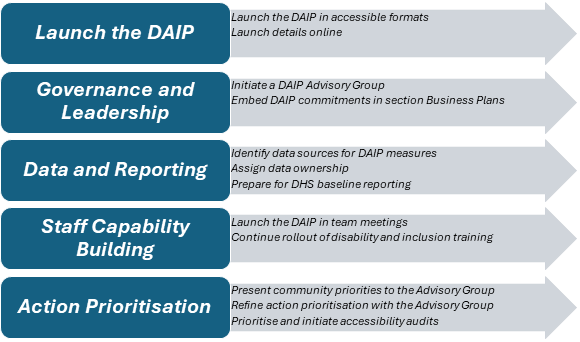
Figure 3: Initial Implementation Phase – Foundational Actions
Ongoing Engagement and Continuous Improvement
Engagement with people with disability will be ongoing. Council will maintain feedback channels, involve people with lived experience in implementation, and provide regular updates on progress. Figure 4 shows the Mid Murray Council Continuous Improvement Process.
This approach ensures the DAIP remains a living document, responsive, accountable, and focused on delivering meaningful outcomes for the community.
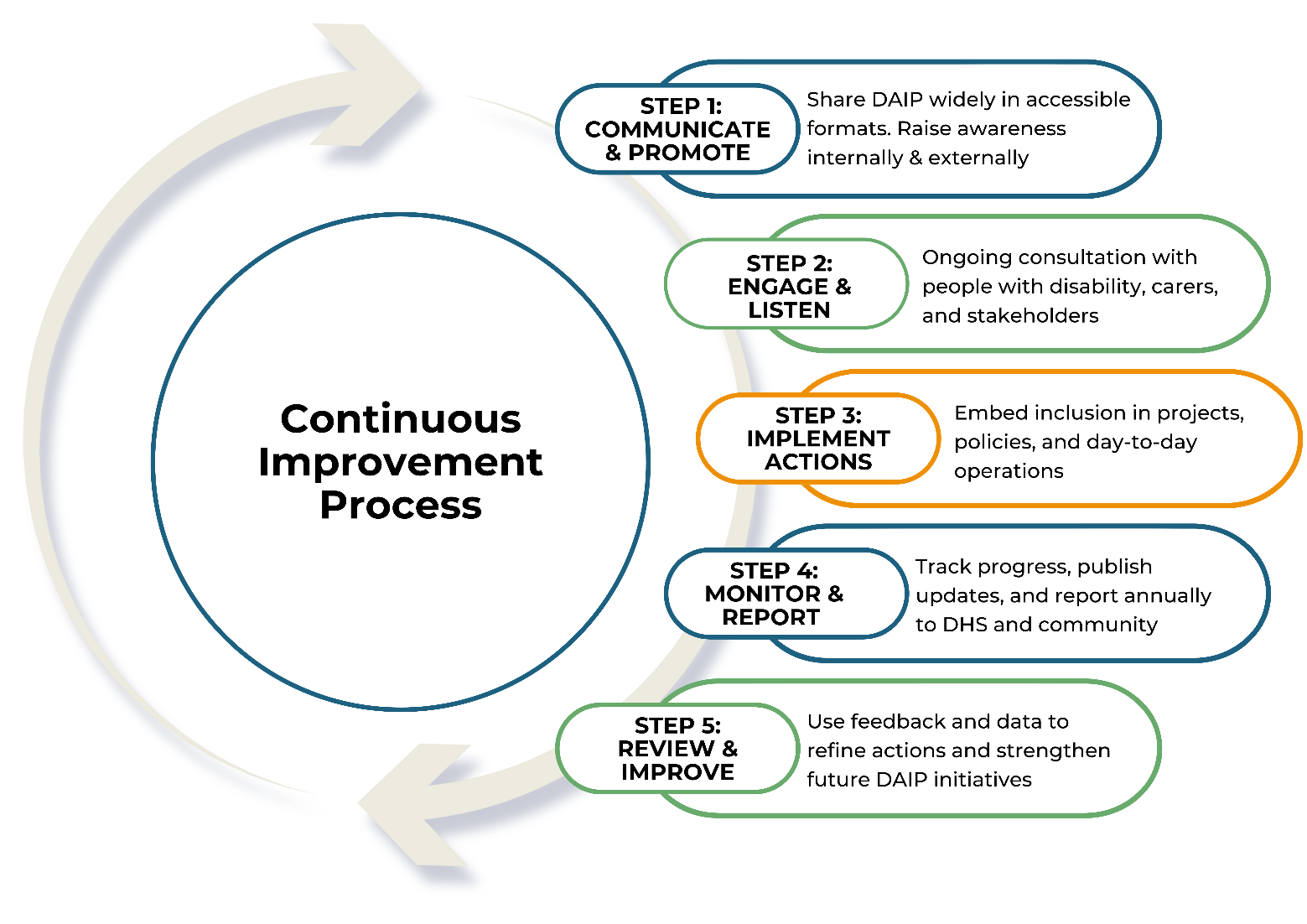
Figure 4: Mid Murray Council Continuous Improvement Process
Acknowledgments
Mid Murray Council acknowledges the valuable contributions of all those involved in developing this Disability Access and Inclusion Plan. We thank Council managers, directors, and staff for their support in embedding inclusion into planning and operations.
Most importantly, we recognise the expertise of community members and Council staff with lived experience of disability, their carers, and advocates who participated in workshops, drop-in sessions, surveys, and interviews. Their insights were listened to, respected, and incorporated into this plan, ensuring that real experiences shaped practical solutions.
We also appreciate the input of local service providers, community organisations, and project partners who contributed through the engagement sessions and the survey to strengthen the plan’s actions and outcomes.
Glossary
Accessibility
The extent to which people with disability can access information, spaces, products, and services without barriers. Accessibility includes physical, digital, and communication environments.
Accessible Formats
Accessible digital information published in Word or PDF format and/or HTML format compliant with WCAG 2.2 AA standards.
Action
Practical steps implemented and monitored to ensure progress towards achieving outcomes in the Disability Access and Inclusion Plan (DAIP).
Australia’s Disability Strategy (ADS)
A national plan for inclusion that provides an overarching approach for governments to meet obligations under the United Nations Convention on the Rights of Persons with Disabilities (UNCRPD).
Built Environment
Artificial structures, features, and facilities viewed collectively as an environment in which people live, work, and interact.
Carer
A person who provides unpaid care and support to a family member or friend with disability, chronic illness, or age-related condition.
DAIP (Disability Access and Inclusion Plan)
A plan developed by South Australian State authorities and local councils to improve access and inclusion for people with disability. DAIPs operationalize the State Disability Inclusion Plan and align with legislative requirements under the Disability Inclusion Act 2018 (SA).
Disability
A condition that may be physical, sensory, cognitive, psychosocial, or intellectual, which can create barriers to participation when environments, systems, and attitudes are not inclusive.
Disability Discrimination Act (DDA)
The Disability Discrimination Act 1992 (Cth) is a federal law that protects individuals from discrimination based on disability in various aspects of public life, including employment, education, access to goods and services, housing, and public spaces.
Equal Opportunity Act (EOA)
The Equal Opportunity Act 1984 (SA) promotes fairness and prevents discrimination in areas such as work, education, and services based on attributes including disability, race, gender, and age.
Inclusive Design / Universal Design
Designing products, environments, and services to be usable by all people, to the greatest extent possible, without the need for adaptation or specialized design.
Intersectionality
The interconnected nature of social identities (such as disability, gender, culture, and age) and how these intersections create unique experiences of disadvantage or discrimination.
Lived Experience
The personal knowledge and insights gained from direct, first-hand involvement with disability.
Mainstream Services
Supports and services that are widely accessible to the general public, rather than being limited to a specific group, and are non-NDIS services.
Measure
A quantifiable indicator used to track progress toward achieving an outcome in the DAIP.
Outcome
The desired result or goal representing the intended positive change because of the action taken.
Person-Centred Emergency Preparedness (P-CEP)
An approach to emergency planning that involves people with disability in identifying their needs and strategies to stay safe during emergencies.
Safeguarding
Processes and measures to protect people’s health, wellbeing, and human rights, ensuring they are safe from harm, abuse, and neglect.
State Disability Inclusion Plan (State Plan)
The South Australian Government’s strategic framework for improving access and inclusion for people with disability across five domains: Inclusive Environments and Communities, Education and Employment, Personal and Community Support, Health and Wellbeing, and Safety, Rights and Justice.
UNCRPD (United Nations Convention on the Rights of Persons with Disabilities)
An international treaty that affirms the rights of people with disability to enjoy human rights and fundamental freedoms on an equal basis with others.
Endnotes
-
Regional Public Health and Wellbeing Plan 2022-2026 – Murraylands & Riverland LGA
↑